Critical Requirement
Commercial kitchens with hood fire suppression systems must have them inspected and tagged approximately every six months by a licensed technician. No current tag can result in fire marshal violations, possible shutdown, and insurance cancellation.
What Is a Kitchen Fire Suppression System?
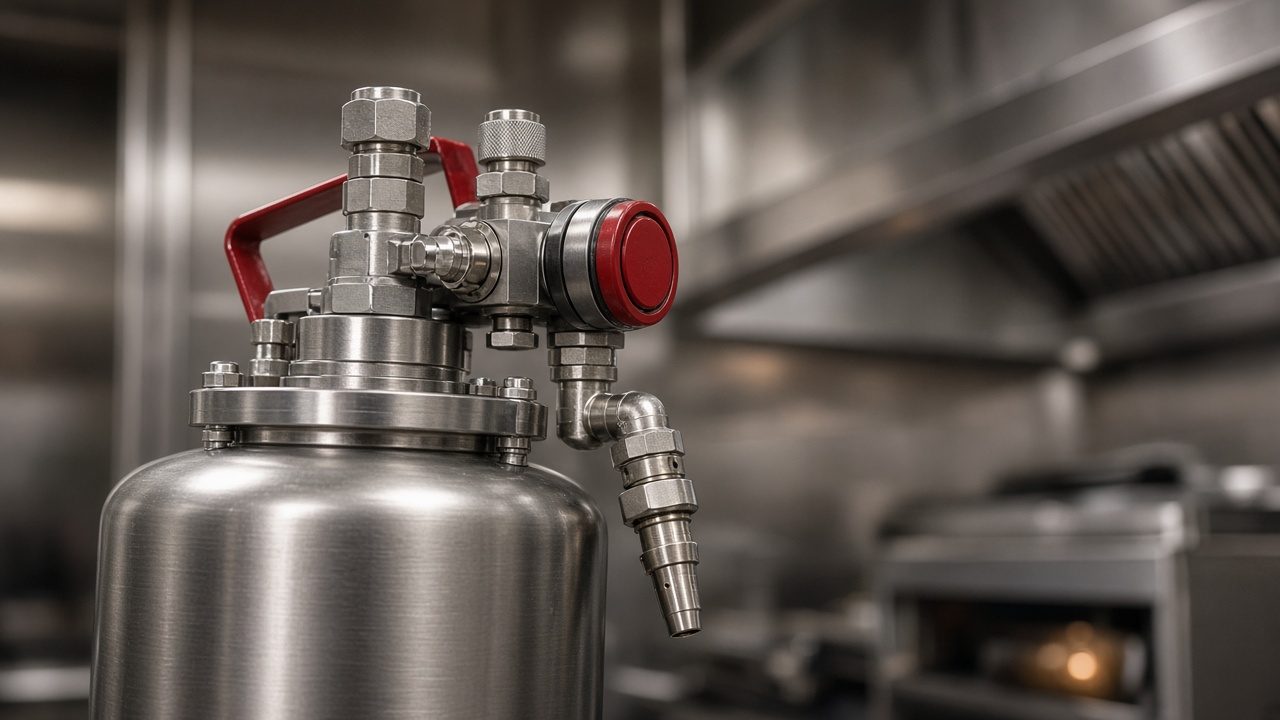
A commercial kitchen fire suppression system is a fixed, automatic fire protection system installed above cooking equipment (ranges, fryers, grills, ovens). The most common type is a wet-chemical systemthat uses a low-pH liquid agent specifically designed to suppress Class K fires — fires involving cooking oils, fats, and grease.
Common brands include:
- Ansul R-102 and Piranha — the most widely installed systems in North America
- Kidde WHDR — UL 300 wet-chemical systems
- Range Guard (Badger) — pre-engineered kitchen suppression
- Buckeye Kitchen Mister
- Pyro-Chem Kitchen Knight II
These systems are not the same as hood cleaning. Hood cleaners remove grease buildup from ducts and fans. Fire suppression inspectors certify that the chemical system itself is ready to discharge if a fire occurs.
What Does NFPA 17A/96 Require?
NFPA 17A (Standard for Wet Chemical Extinguishing Systems) and NFPA 96 (Standard for Ventilation Control and Fire Protection of Commercial Cooking Operations) are the two national codes governing kitchen fire suppression in the United States.
NFPA 96 Section 11.2.2 requires:
"Fire-extinguishing equipment protecting cooking operations shall be inspected and serviced at intervals in accordance with NFPA 17A, but not less than semiannually."
In plain language: Your kitchen suppression system must be inspected at least twice a year(approximately every six months) by a qualified, licensed technician. Some jurisdictions may allow inspection intervals up to 12 months for certain low-volume systems, but the default standard is six months.
What Happens During the Inspection?
A licensed kitchen suppression inspector will:
- Verify that nozzles are properly aimed at current cooking equipment
- Check chemical agent levels and system pressure
- Replace fusible links (heat-sensitive triggers)
- Test manual pull station operation
- Verify gas and electrical shutoffs work correctly
- Inspect the detection line and control head
- Confirm piping integrity and connections
After the inspection, the technician affixes a dated certification tag to the system. This tag shows the inspection date, the technician's license number, and the next due date. Fire marshals check for this tag during routine inspections.
What If I Don't Have a Current Tag?
Operating a commercial kitchen without a current fire suppression inspection tag can result in:
- Fire marshal violations — cited during routine inspections or license renewals
- Mandatory reinspection — you'll need to schedule and pass a follow-up visit
- Possible shutdown order — if the violation is severe or the system is found inoperable
- Insurance problems — many commercial kitchen policies require proof of current inspection
- Liability exposure — if a fire occurs and the system wasn't properly maintained
Hood Cleaning vs. Fire Suppression Inspection
These are NOT the same service:
Hood Cleaning (IKECA)
- Removes grease from ductwork
- Cleans fans and plenums
- Performed by degreasing companies
- Frequency varies (monthly to annually)
- NFPA 96 Table 11.4
Fire Suppression Inspection
- Certifies the chemical system
- Replaces fusible links
- Tests discharge readiness
- Every 6 months (NFPA 17A/96)
- Requires fire equipment license
Some companies offer both services, but they are separate inspections with different licensing requirements. A hood cleaning certificate is not a substitute for a fire suppression inspection tag. Full comparison: hood cleaning vs suppression.
Who Can Perform the Inspection?
Fire suppression inspection must be performed by a technician holding the appropriate state license. Requirements vary by state:
- Texas: Type K (Kitchen Cooking Systems) license or higher (FEL-K, FEL-A, EPL). Company must hold a Fire Extinguisher Certificate of Registration (ECR).
- California: C-16 Fire Protection Contractor license plus State Fire Marshal certification.
- Florida: Kitchen hood systems are pre-engineered systems, so the company needs a State Fire Marshal Class D fire equipment dealer (FED) license and the technician needs a permit (Fla. Stat. 633.304; Fla. Admin. Code 69A-21). Fire protection contractor (FPC) certificates do not cover pre-engineered systems.
- New York: Master Fire Suppression Piping Contractor (MFSPC) license for installation; factory-trained technicians for inspection under the contractor's supervision.
Additionally, many jurisdictions require that the technician be factory-trained and authorized by the system manufacturer (Ansul, Kidde, etc.) to service that brand.
Who Needs This?
NFPA 17A/96 applies to any facility with commercial cooking operations that produce grease-laden vapors, including:
- Restaurants and bars
- Food trucks and mobile kitchens
- Hotel and hospital kitchens
- School and university cafeterias
- Commissary and ghost kitchens
- Grocery stores with prepared food
- Nursing homes and assisted living facilities
If you have a hood over cooking equipment and a fire suppression system installed, you need the six-month inspection.
How to Schedule Your Inspection
Use HoodInspect to find a licensed inspector in your area:
- Search by your city or system brand
- Verify the inspector holds a current state license
- Confirm they are authorized for your system brand (Ansul, Kidde, etc.)
- Request an inspection quote
- Schedule your six-month visit
Most inspectors can perform the service on-site during business hours with minimal disruption to your kitchen operations.
Related guides
- Hood cleaning vs fire suppression inspection — dedicated comparison: certificates, frequency, licenses, and FAQs.
- NFPA 17A vs NFPA 96 — what each standard covers for kitchen suppression and the six-month tag (not legal advice).
- How to identify Ansul vs Kidde — read the cylinder nameplate so you hire an inspector authorized on your system.
Find inspectors in Dallas, Houston, Austin, Atlanta, Miami, New York City, Los Angeles, San Diego, Chicago, Phoenix, Washington DC, Philadelphia, and Denver.
Find a Licensed Inspector Near You
Search our verified directory of factory-authorized kitchen fire suppression inspectors.
Search by City